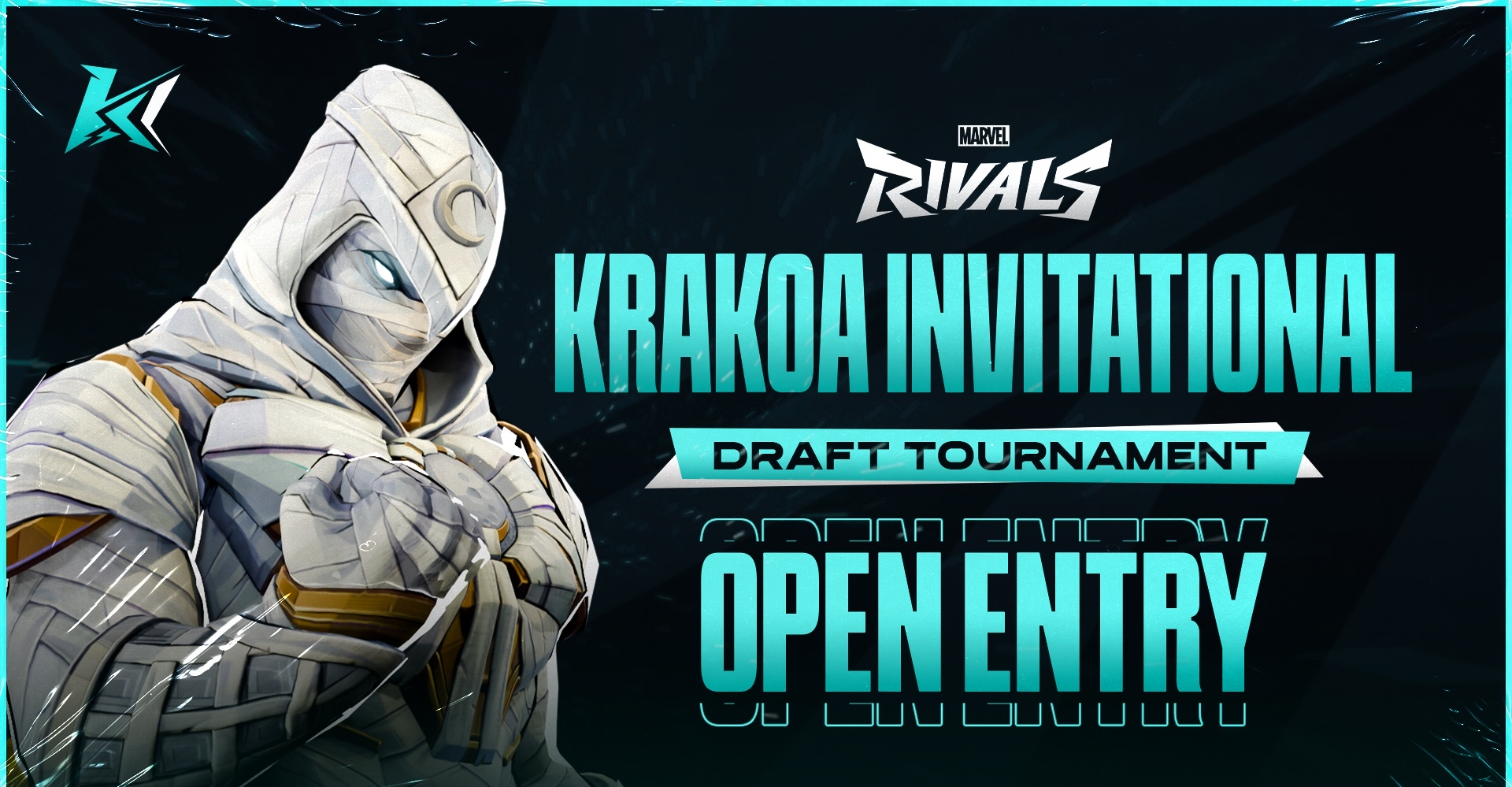
The creativity and drive of the collegiate esports “Marvel Rivals” community never cease to amaze me. Though the leagues that took place during the Fall 2025 and Spring 2026 semesters were impressive, “Rivals” players came together in an unprecedented way with the founding of the Krakoa Invitational draft tournament that took place from June to August 2026.
The Krakoa Invitational was created by the UCO “Marvel Rivals” varsity captain, Connor “Phoenix” Stephens, who had been looking for draft tournaments to play in over the summer.
“At first I was demotivated,” Stephens said. “But then I thought about it…what if I just make my own?”

Stephens, along with a few of his friends at UCO, decided to form the Krakoa Invitational using their connections with other collegiate “Rivals” players from the previous year of matches.
“We started reaching out to all the collegiate players we knew,” Stephens said. “Because we made it to nationals, we played in more matches than we would have otherwise. So, we came into contact with more teams than we would have otherwise.”
Stephens and the other organizers reached out to around 15 colleges, but had few initial responses. He then became verified as a tournament organizer, which permitted him to advertise the invitational in large Discord servers, including the official “Marvel Rivals” Discord server.
“Once we had 80 (members), we reached back out to a lot of the colleges, and OU, being one of them, saw that it was a real thing that was going to happen.”
Around 180 people participated in the tournament, including OU “Rivals” players Malekai “BeaniestBean” Ren and Riley “XLG Pi” Anderson. Stephens reached out to Ren specifically, and Ren informed the rest of the OU “Rivals” team of the opportunity.
“A few people on my team originally were very interested in it,” Anderson said. “We were all going to do it and going to try to get on a team.”
While draft tournament teams are picked by team captains from the pool of players, the Krakoa Invitational allowed three players on one six-person team to be from the same college. Unfortunately, everyone except Ren and Anderson dropped from the tournament, and the remaining two were on separate teams. Ren ended up on the same team as Stephens, who participated in the tournament.

“It was really cool meeting people and playing on the team,” Stephens said. “One of the best parts about draft tournaments is you’re always meeting new people and building relationships with new teammates.”
Anderson was nervous about the prospect of playing with new teammates initially.
“It was intimidating because it’s like, ‘now there are seven players that I have to introduce myself to that I’ve never played with before,’” Anderson said. “It feels as though I have to perform well for them to justify having picked me.”
While Anderson is a mainstay Duelist main for the OU “Rivals” team, he was able to flex to other roles in the tournament depending on his team’s needs. He played all three major roles over the course of the tournament depending on what worked best for the team, and he enjoyed it immensely.
“It was really nice getting to work with other people,” Anderson said. “It’s eye-opening in terms of strategy because these people all have different ideas than the OU “Marvel Rivals” team. We all build into our idea of how the game should be played, but whenever you’re looking at players from all across the nation, they all have their own collegiate programs and built their understanding of the game with their coaches and players.”
Anderson found these different perspectives helpful in how he views “Rivals” at a high skill level. Playing on a team of unknowns allowed him to look at the game in an entirely new light.
“I wasn’t the best player. On the OU “Rivals” team, there’s an expectation a lot of the time that I’ll have to put up good numbers. Whereas in this game, it was much easier playing with the team because we had wonderful role players.”
Stephens, who had a huge part in organizing the tournament, was excited to see so many different players working together.

“It was everything I hoped for with the first tournament we ever hosted,” Stephens said. “To have enough turnout to have two divisions with teams of eight players was a tremendous payoff to all the work we had put in.”
Organizing the tournament was particularly important to Stephens, who was driven to get the invitational going as soon as possible. Stephens had to learn to trust in his fellow organizers and friends, but his passion, as well as his fellow organizers’ help, were a huge part of why the tournament was so successful over the summer.
“Ren was one of the people who stuck out in particular as very willing to help out and do a bunch of stuff to keep (the tournament) running,” Stephens said. “It’s been such a fantastic experience.”

The overall tournament was quite successful, and the finals ended up being livestreamed on Twitch with casters providing commentary. Anderson’s team, The Breakfast Club, ended up winning the finals and came out of the tournament with only one loss against the same team, the KC Misfit Kings, during scrimmages earlier in the tournament before the actual eliminations had begun.
“Winning 4-0 was a pretty fun way to go,” Anderson said. “It was also fun playing the finals match. It was our third time playing this team. We played them in the upper bracket, then they came back from the lower bracket, and we played them in the grand finals.”
Anderson is proud of his performance in the tournament, and he’s excited to play against some of his former draft teammates in the Fall 2026 NECC season of “Rivals” when it starts later in September.

When looking to the future of the Krakoa Invitational, however, Stephens wants to improve on organization and player retention. There were substitutions throughout the tournament for players who had to drop out for various reasons, and Stephens wants to ensure that things run more smoothly next time.
“We intend to get more community feedback,” Stephens said. “We pick staff who played in the last tournament, and we intend to delegate and spread responsibilities out so the mistakes of this (tournament) become the mistakes of yesterday.”
The sense of pride and community I felt from both Stephens and Anderson was astounding. This tournament was an opportunity for collegiate players to make friends across schools and state lines, as well as improve in-game.
“Esports is a place where you get to build a community of people who work on getting better at something,” Stephens said. “You’re not just sitting there to play the game. That’s a really beautiful thing that things like this offer, and that people outside of esports don’t have the perception and ability to see.”
The Krakoa Invitational is planned to be a yearly draft tournament, with the next one taking place in the summer of 2027. I was incredibly impressed by the work put into this tournament, and I hope to see it improve and grow with even more organization in the coming years.